into an edible table olive
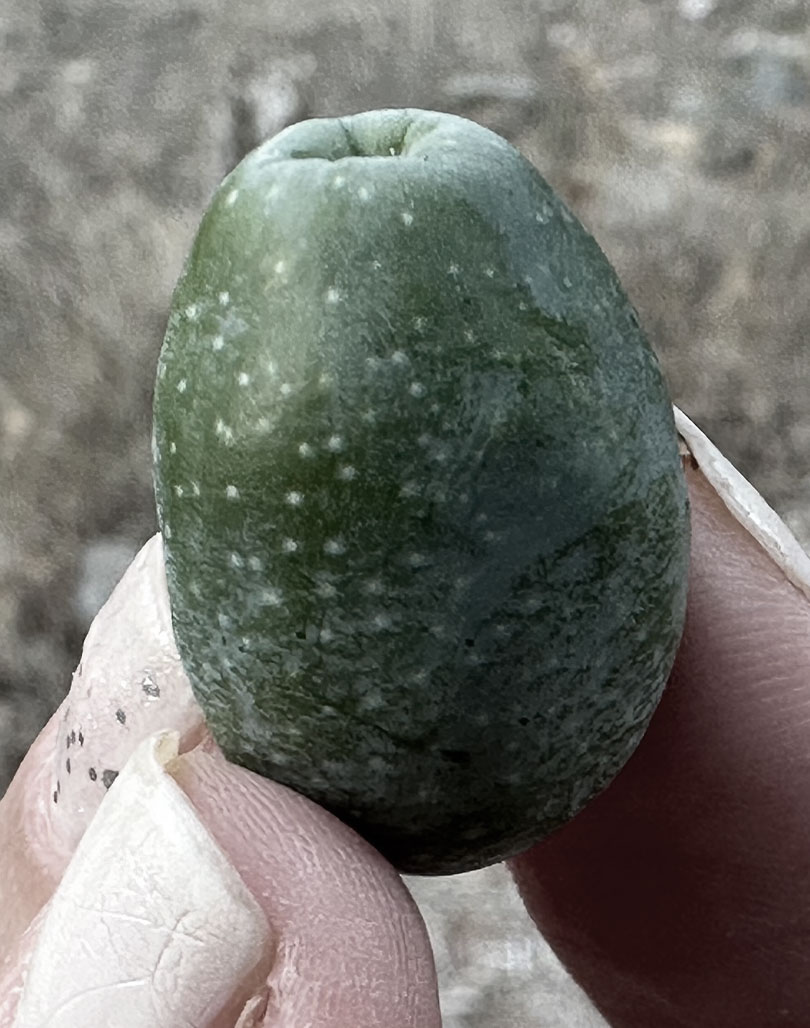
Converting the olive type "Thrubelia"
into an edible table olive
Converting the olive type "Thrubelia"
Thrubelia
Region of Crete
Project title
Laboratory recording of the natural process of converting the olive type “Thrubelia of Crete” into an edible table olive without the use of chemicals.
Project code: M16SYN2-00153
Submeasure 16.1- 16.2 “Establishment and operation of operational groups of the European Innovation Partnership (EIC) for the productivity and sustainability of agriculture” of the Rural Development Program of Greece 2014 – 2020.
Objective of the project
Imitation on a laboratory scale of the process carried out on the tree greatly reducing the risk of spoilage of the products before harvest and significantly reducing the cost of producing a quality standardized product.
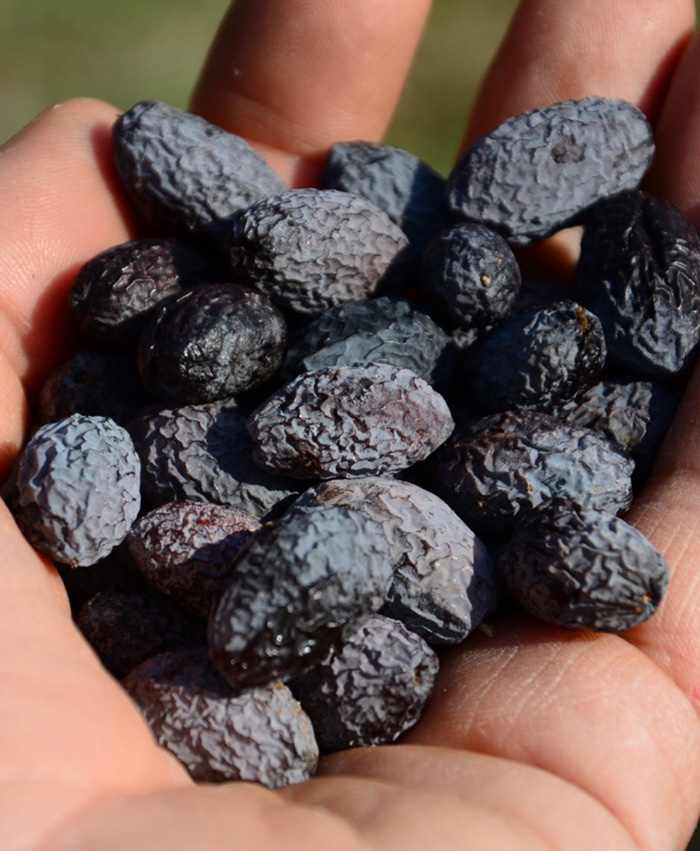
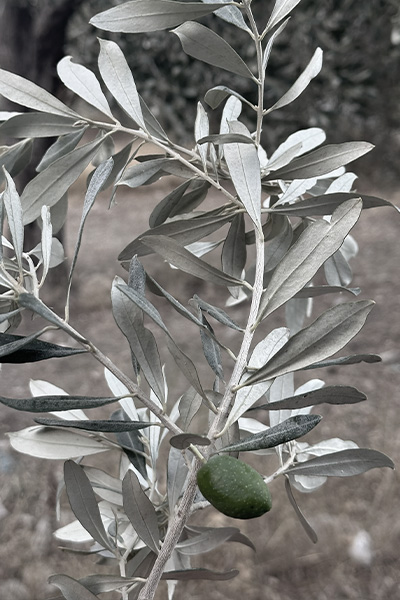
Greece is an olive-producing country with a huge volume of olive production which constitutes a large quantitative part of the total agricultural production of Greece, as it is favored by the climatic conditions that prevail in the Mediterranean region, which in turn meet the requirements of the olive tree. There is a wide range of varieties which are distinguished according to the size of the nucleus into micronuclei, mesonuclei and macronuclei. In the second category, i.e. in the mesopyrenes, belongs the variety of the Thromba (Thrumbelia) olive, which is also cultivated in Crete. This particular variety has a particularity in relation to other olive varieties. When the fruits are still on the tree, they lose some of their moisture and are attacked by the Phoma oleae fungus.
This fungus breaks down the bitter substance eleuropein and thus the olive loses its bitter taste, gradually ripening and turning black on the tree. Nevertheless, depending on the weather conditions, when the olive remains on the tree it deteriorates, due to other factors and micro-organisms. A capture of the process carried out on a laboratory scale is therefore required so that it can be replicated on a large scale. This solution is expected to lead to greater replanting and development of the specific variety due to the re-exploitation of the table olive.
Business plan objective
Imitation on a laboratory scale of the process carried out on the tree greatly reducing the risk of spoilage of the products before harvest and significantly reducing the cost of producing a quality standardised product.
OBJECTIVE 1.
Capturing in laboratory climates the process that takes place in the tree
OBJECTIVE 2.
Significant reduction in the risk of spoilage of products before harvest
OBJECTIVE 3.
A significant reduction in the cost of producing a quality standardized product
Work units
Work unit 1
Analyzes will be carried out to correlate the soil with the final product as well as leaf analyzes to evaluate the olive trees
Work unit 2
A laboratory isolation of the fungus Phoma oleae from the Thromba olive fruit on the tree will be carried out so that it can be identified and used to de-bitter the fruit on a laboratory scale (EE2) (not on the tree)
Work unit 3
Edible “THROUBA” olive products will be produced debittered and dehydrated with the proposed protocol for the use of an isolated fungus, on a pilot scale and all the microbiological, nutritional quality and organoleptic parameters of the final products will be analyzed.
In addition, an economic-technical study will be carried out in order to establish the comparative advantages of applying standardized desiccation over physical.
Implementation methodology
In the context of this project, guidelines will be drawn up for the optimal cultivation technique of the specific olive trees using manure, algae and biodynamic agriculture preparations and appropriate analyzes will be carried out by the Institute of Soil and Water Resources, Department of Soil Science of Athens (Lykovrysi) for the correlation of the soil with the final product as well as leaf analyzes for tree evaluation.
Afterwards, the Institute of Agricultural Products Technology (Lykovrysi) will undertake to carry out the work of laboratory recording of the natural process of converting the well-known “THROUMBA” olive of Crete into an edible product without the use of chemicals. The de-bittering process will be studied using olives of this particular variety and inoculation with the fungus Phoma oleae which will be isolated from already naturally de-bittered olives. This will be followed by a recording of the de-bittering process with analysis of parameters such as sugar profile, eleuropein reduction, physicochemical parameters, organoleptic evaluation and microbial analysis. Afterwards, natural drying methods will be applied to convert it into an edible product. For the final products produced, a full analysis and comparative evaluation will be carried out with olives naturally produced on the tree.
Step 1.
Capturing the natural conversion process
of the well-known “THROUBA” olive of Crete
in an edible product
Step 2.
Astringent using olives of the specific variety
and inoculation with the fungus Phoma oleae which
will be isolated from already naturally debittered olives
Step 3.
Application of natural drying methods
for the transformation of the olive
in an edible product
All the results obtained will be published in scientific journals and conferences, while the mediator will help to disseminate the results to local farmers and cooperatives, as well as to the electronic database of innovation projects in the National Agricultural Network (EAD) and the ESK network ( EIP – AGRI).
Expected results
The actions that will be carried out are expected to help significantly in highlighting the special characteristics of the specific olive variety and in capturing the natural process that takes place on the tree for its desensitization.
The immediate results will be:
Revival of cultivation in the area (currently there are 400,000 trees of this variety as opposed to 600,000 a decade ago).
Increase of cultivated acres in the coming years in relation to those cultivated today with increased production of this type of olives (the average production of Thromba fruit is 3,000 tons per year while it could be more than 10,000).
Highlighting the special quality characteristics of the specific olive variety.
Implementation of quality protocol and drafting of cultivation technique instructions for production of quality final products.
Capturing the desalting process on a laboratory scale, allowing for large-scale reproduction as well, greatly reducing the risk of spoilage of products before harvest, but also significantly reducing the cost of producing a quality standardised product.
Contribution to the increase in the processing and standardisation of local products, establishment-organization and management of small businesses, development of local entrepreneurship.
In addition, with the production of this type of olives, the added value of Throuba olives increases significantly, since the naturally ripened olive has three times the price on the retail market than the classic Throuba olive sold as harvested.
Partners
GREEK AGRICULTURAL ORGANIZATION "DIMITRA" - INSTITUTE OF AGRICULTURAL PRODUCTS TECHNOLOGY